The Shift to QR Code Ordering in Indian Restaurants
Dining habits across India have fundamentally transformed. Whether in bustling high-street cafes in Indiranagar, Bengaluru, heritage family restaurants in South Mumbai, chic gastropubs in Cyber Hub, Gurugram, or lively bistros in Pune and Hyderabad, modern diners expect speed, convenience, and seamless mobile interaction. A modern QR ordering system is no longer a temporary health protocol—it has become the operational backbone for high-margin, customer-centric restaurants.
Traditional dining operations frequently suffer from avoidable bottlenecks: servers juggling multiple laminated menus, guests waiting ten minutes just to catch a waiter's eye for extra water or a drink reorder, manual order punch errors at distant billing counters, and frustrating delays when settling bills during peak weekend rush hours. By transitioning to an intelligent table QR ordering platform, restaurant owners eliminate these friction points while simultaneously increasing average order value (AOV) and customer satisfaction.
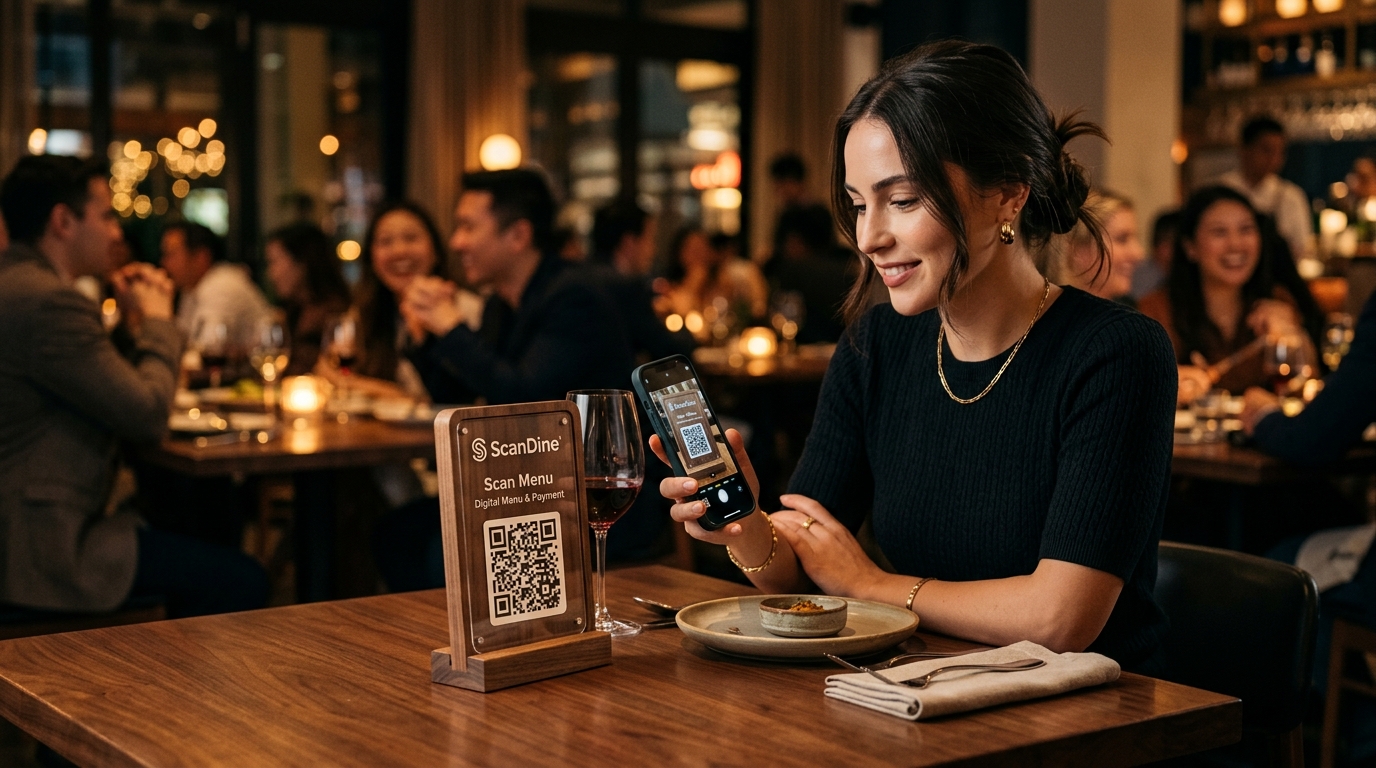
According to F&B industry benchmarks across metropolitan Indian cities, restaurants adopting self-ordering QR systems reduce table turnaround time by 14 to 20 minutes per party and experience an average 22% increase in appetizer and beverage reorders.
5 Technical Pillars of a World-Class QR Ordering System
Before selecting a platform for your restaurant, bar, or cloud kitchen, ensure the solution satisfies these five mission-critical criteria:
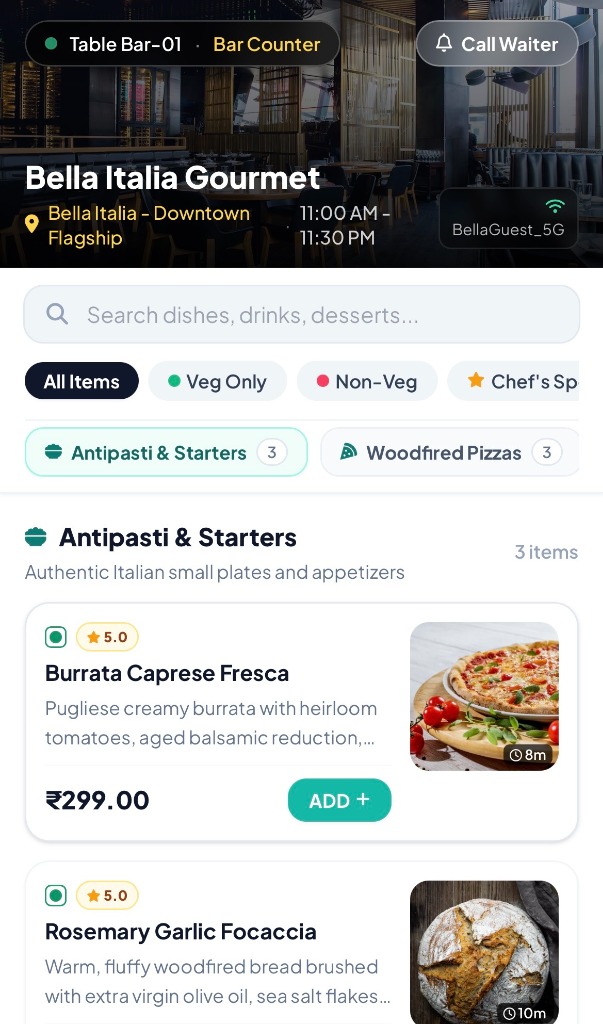
- Frictionless Zero-App Experience: Guests will immediately abandon ordering if forced to install a native app from Google Play or Apple App Store. The system must render instantaneously in standard mobile browsers like Chrome and Safari.
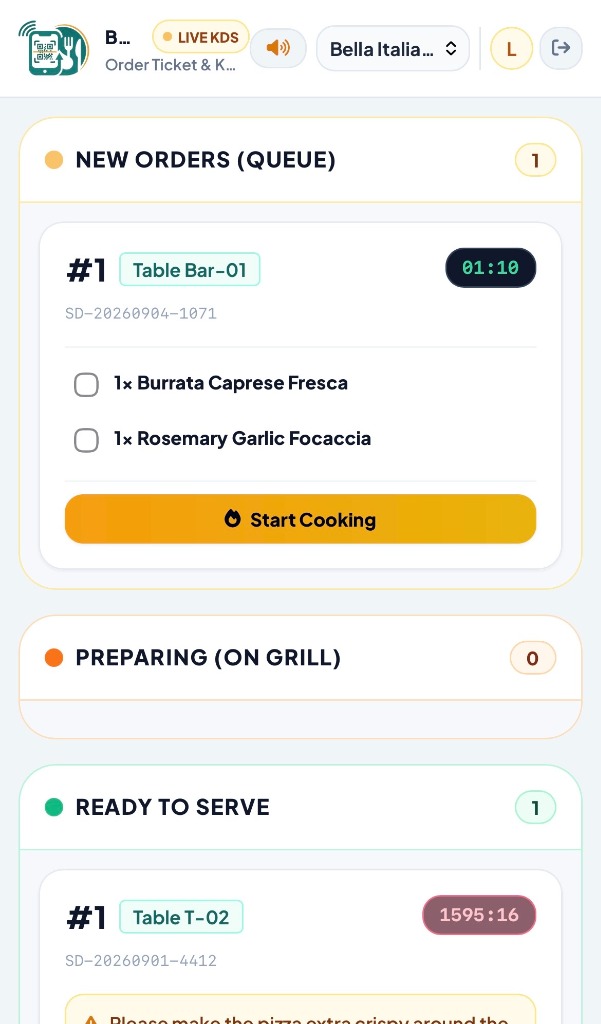
- Sub-Second Real-Time Kitchen Sync: Orders placed on mobile screens must chime on the chef's Kitchen Display System (KDS) within 200 milliseconds using persistent WebSocket or Socket.IO architecture. Lost paper tickets become a thing of the past.
- Interactive Waiter Calling Bell: Contactless does not mean hospitality-free. Diners must have 1-tap dedicated options to request table water, fresh cutlery, bill generation, or direct server assistance.
- End-to-End Waiting Queue Integration: Entrances and dining rooms should not operate in silos. Queued guests holding a digital token should be able to pre-browse the menu while waiting and transition straight into active table ordering upon seating.
- Transparent 0% Commission SaaS Pricing: Avoid third-party aggregators that skim 15% to 28% off every dine-in bill. Your software should operate on flat, predictable monthly or annual subscriptions.
Top QR Ordering Platforms in India Compared (2026)
We evaluated the leading dining technology solutions available to Indian restaurateurs based on latency, feature completeness, hardware independence, and total cost of ownership.
| Feature / Metric | ScanDine | Petpooja QR | DotPe | Aggregator Dine-In |
|---|---|---|---|---|
| Customer App Download | Zero (Browser) | Zero (Browser) | WhatsApp / Web | Mandatory App |
| Real-Time Kitchen KDS | Native Sub-Second | Separate Add-on | Basic Printer Slip | None (Merchant App) |
| Waiting Queue Bridge | Included & Autofill | Not Available | Not Available | Not Available |
| Dedicated Waiter App | Native Captain App | Captain POS App | None | None |
| Order Commission | 0% Flat SaaS | Annual Billing POS | Commission / PG % | 12% - 25% + GST |
1. ScanDine: Best Full-Stack Restaurant Operating System
ScanDine stands out as the most modern, integrated dining room management platform tailored specifically for Indian dining habits. Rather than treating QR ordering as an isolated novelty, ScanDine connects guests, waitstaff, kitchen chefs, and managers into a unified real-time loop. It includes native live queue tracking with smart customer autofill, real-time Kitchen Display Systems with color-coded ticket aging, dedicated waiter table calling bells, and deep sales analytics.
Pricing: Transparent flat subscription starting at ₹999/month for starter cafes and ₹1,999/month for full pro restaurants with unlimited orders and zero commissions.
2. Petpooja QR Ordering
Petpooja is a dominant legacy POS system across Indian restaurants, offering reliable offline desktop billing and inventory management. While Petpooja has added QR ordering capabilities, their solution functions primarily as an extension of their desktop billing software rather than an agile, mobile-first guest experience.
3. DotPe
DotPe pioneered catalog-based ordering over WhatsApp and browser links. While effective for takeaway counters, food courts, and retail stores, it lacks specialized dine-in floor controls such as multi-station kitchen routing, server calling, and table turnaround monitors.
Financial Impact: How Indian Restaurants Save ₹60,000+ Monthly
Let us consider a 24-table casual dining restaurant in Mumbai or Bengaluru serving approximately 120 tables daily with an average bill value of ₹1,400:
- Labor Efficiency & Staff Optimization: Because guests browse, customize, and place their own orders, waitstaff focus on food running, hospitality, and upselling specials. A floor that previously required 6 floor servers can easily operate with 4 well-coordinated captains, saving approximately ₹36,000 in monthly payroll.
- Zero Aggregator Dine-In Commissions: If 30 tables daily pay through an aggregator dine-in app charging a 15% commission fee, the restaurant loses ₹6,300 per day or over ₹1,80,000 every month in commission cuts. Direct QR dining preserves 100% of your earnings.
- Higher Ticket Sizes from Visual Appetizers: High-definition photographs of signature cocktails, artisanal breads, and desserts trigger impulse buys. Operators report a 15% to 25% surge in beverage and side orders within the first month.
Frequently Asked Questions
Will elderly guests or families struggle with QR menus?
No. ScanDine is designed with intuitive large fonts, crisp photos, and simple 1-tap cart additions. Furthermore, servers always retain the ability to punch orders on their captain waiter app, ensuring that guests who prefer personal assistance receive attentive, five-star service.
What happens if the restaurant Wi-Fi goes down?
Because customers access ScanDine through their smartphones, orders use the guest's 4G/5G mobile data network to reach cloud servers, meaning temporary local Wi-Fi disruptions never halt table ordering.
Conclusion: Modernize Your Dining Floor Today
Choosing the right QR ordering system is one of the highest-ROI operational decisions an Indian restaurant owner can make. By providing diners with an effortless, visual ordering journey while streamlining kitchen communication through real-time KDS dispatch, ScanDine empowers your team to deliver faster service and drive higher margins.