The Great Restaurant Menu Debate
For centuries, the physical menu card has served as the tangible centerpiece of the restaurant dining experience. Beautifully embossed leather binders, crisp laminated tri-folds, and glossy paper cards have been the default medium through which restaurateurs communicate their culinary offerings. However, as diner habits evolve, ingredient costs fluctuate rapidly, and labor pressures mount across India's hospitality sector, the limitations of traditional paper menus have become undeniable.
Enter the dynamic QR digital menu. Is transitioning entirely to digital ordering the right choice for your establishment, or does the tactile charm of physical paper still reign supreme? In this comprehensive operational analysis, we compare digital and traditional menus across economics, customer psychology, operational speed, and revenue generation.

The average 30-table casual dining restaurant in India spends between ₹25,000 and ₹45,000 annually solely on reprinting laminated menus due to food stains, torn corners, seasonal dish updates, and price adjustments.
Head-to-Head Comparison: Physical vs Digital QR Menus
| Evaluation Factor | Traditional Paper / Laminated | ScanDine Digital QR Menu |
|---|---|---|
| Updating Prices & Dishes | Requires full batch reprinting (2–5 days) | Instant update in 5 seconds from phone/laptop |
| Sold-Out / 86'd Items | Server must apologize after customer orders | 1-tap toggle marks item out-of-stock instantly |
| Visual Appeal & Photos | Space-limited text descriptions with few photos | Vibrant HD photos and video clips for all dishes |
| Upselling Add-Ons | Relies 100% on server memory and enthusiasm | Automated prompts: extra dips, cheese, beverage pairings |
| Multi-Language Support | Single language (typically English only) | Instant translation: Hindi, Marathi, Kannada, English |
| Hygiene & Cleanliness | Handled by hundreds of diners daily, sauce stains | 100% hygienic on customer's own device |
The Psychology of Visual Menu Engineering
One of the most profound advantages of digital menus lies in consumer psychology. When guests browse a dense, text-only printed menu, their cognitive focus centers on pricing columns, instinctively triggering price resistance.
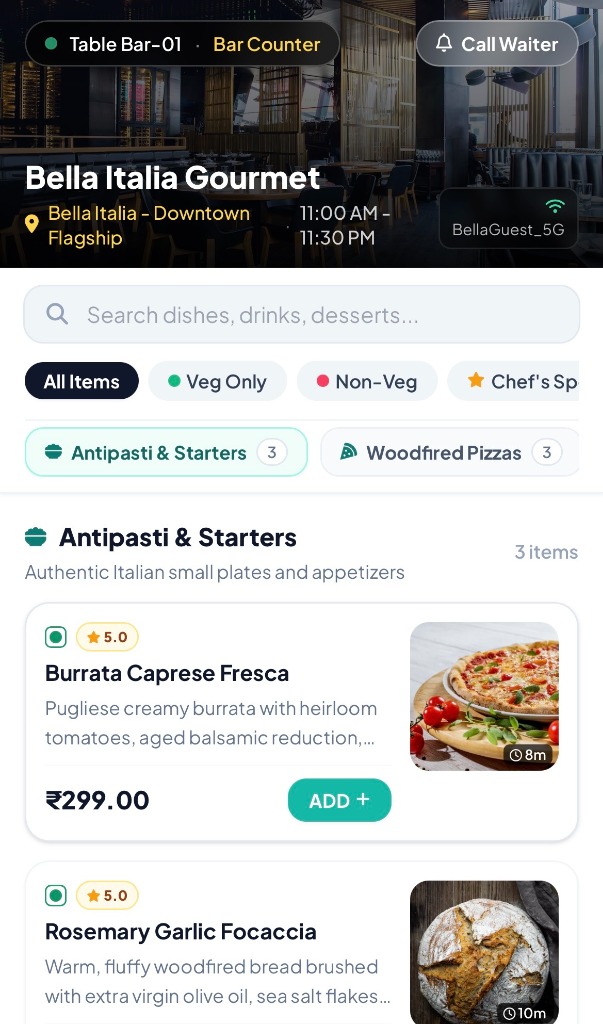
Conversely, when diners browse an interactive digital menu filled with vivid, vibrant food photography, their sensory decision-making shifts from price calculation to craving satisfaction:
- The Dessert Surge: Visual digital menus increase dessert order rates by 34%. While diners frequently decline verbal dessert offers from servers, seeing a steaming molten chocolate lava cake or warm Gulab Jamun platter on their smartphone screen triggers instant desire.
- Signature Drink & Mocktail Discovery: Colorful cocktail and artisanal coffee imagery turns casual tap-water diners into beverage consumers, driving your highest-margin category.
- Frictionless Customization: Guests are much more likely to check a ₹40 "Add Extra Truffle Oil" or ₹50 "Double Cheese" checkbox on their own terms than verbally request it from a rushed server.
When Do Physical Menus Still Make Sense?
While over 90% of cafes, pubs, fast-casual eateries, and multi-cuisine family restaurants benefit massively from switching to QR menus, there remain specific use cases where physical menus retain value:
- Ultra-Luxury Tasting Menus: Micheline-style or bespoke five-star dining concepts where multi-course omakase menus are presented on handmade deckle-edge paper.
- Wine & Sommelier Lists: Extensive 500-bottle wine cellars where diners enjoy physically flipping through vintage leather volumes alongside a dedicated sommelier.
Even in these luxury environments, forward-thinking operators employ a hybrid strategy: a leather-bound physical card for introductory browsing paired with a discreet table QR for instant sommelier paging, water refills, and seamless digital checkout.
The Verdict
For modern Indian restaurants aiming to maximize profitability, eliminate reprint expenses, speed up table turns, and deliver an engaging culinary story, digital QR menus are vastly superior. Ready to see how easy it is to launch your restaurant's digital menu? Start your free 7-day ScanDine trial today.