
The Hidden Cost of the "Wrong Dish"
Every restaurant manager in India knows the sinking feeling that accompanies a server walking an untouched plate back into the kitchen: "Table 6 said they asked for Jain Paneer Makhani without onions or garlic, but the kitchen sent regular." Or: "Table 12 ordered butter naan, but plain roti was punched."
Order mistakes are far more than a minor annoyance. When an incorrect dish is delivered to a table, the financial and reputational fallout cascades across the entire operation: the meal must be re-cooked while the rest of the table eats, leading to awkward pacing; the wasted dish is discarded at a 100% loss of food cost; the server is stressed; and the customer leaves dissatisfied, frequently expressing their frustration through a damaging 1-star review on Google or Zomato.

In an average 25-table casual restaurant, 3 to 5 order mistakes occur every single shift. At an average cost of ₹350 per remade dish, order errors bleed between ₹31,000 and ₹52,000 every month in wasted raw ingredients and comped meals.
The 5 Most Common Order Errors in Indian Restaurants
- Spice Level & Dietary Nuances: Indian cooking involves precise dietary preferences: Jain (no root vegetables, onion, or garlic), Navratri fasting restrictions, Halal, Pure Veg, and dairy or nut allergies. In noisy dining rooms, verbal instructions get lost in translation.
- Bread & Accompaniment Mixups: A guest orders 2 Butter Roti, 1 Garlic Naan, and 1 Laccha Paratha. The server jots down notes in messy shorthand, and the tandoor chef accidentally bakes 4 plain rotis.
- Forgotten Beverage Reorders: During a busy rush, a server nods to a beverage reorder, but gets sidetracked by another table and completely forgets to punch the ticket.
- Table Number Transposition: A server punches Table 14's chicken tikka for Table 41, causing confusion and delivering food to the wrong party.
- Billing Punch Errors: Items punched by mistake remain on the customer's bill, creating an uncomfortable dispute during payment.
How ScanDine Achieves 99.8% Order Accuracy
ScanDine solves order errors by removing intermediate transcription entirely:
- Direct Customer Selection: The diner selects their exact dish, chooses their spice level via intuitive radio buttons, and checks custom modifier boxes on their own smartphone.
- Clear Dietary Flags: Jain and Vegan options are isolated and cannot be accidentally mixed up with regular preparations.
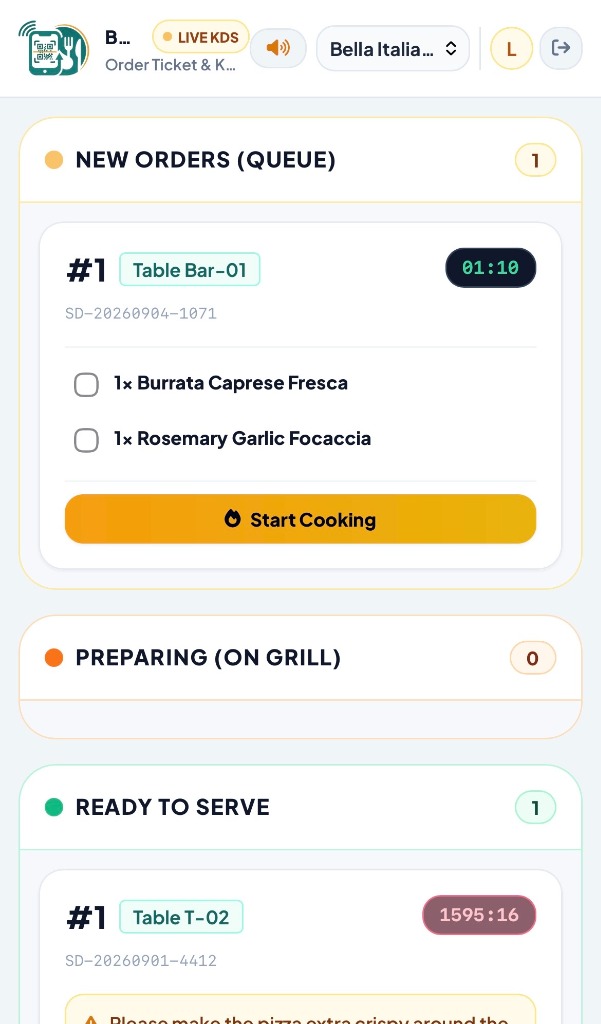
- Instant High-Contrast KDS Notes: When the order routes to the kitchen screen, special requests appear in bright yellow highlighted callouts directly beneath the dish title.
- Station-Level Separation: Drinks route directly to the Bar KDS, tandoor items to the Tandoor KDS, and curries to the Main Cookline KDS automatically.
- Immutable Digital Audit Trail: In the rare event of a dispute, both customer and manager can reference the live digital timestamped receipt showing the exact options selected.
Verbal Paper Orders vs ScanDine Self-Ordering Accuracy
| Operational Area | Verbal Paper KOT Method | ScanDine QR Self-Ordering |
|---|---|---|
| Overall Error Rate | 6% to 9% of all orders | Less than 0.2% (99.8% accurate) |
| Dietary Customization | Frequent miscommunication | Selected directly by guest on phone |
| Comped Food Losses | ₹30,000–₹50,000 monthly | Near ₹0 |
| Customer Reviews | Periodic 1-star complaints on Google/Zomato | Consistent 5-star feedback for speed and accuracy |
Case Study: A 30-Table Pune Cafe Cuts Remakes by 95%
A popular multi-cuisine cafe in Kalyani Nagar, Pune, struggled with kitchen mixups during busy weekend brunches. Orders for iced lattes with almond milk frequently arrived with dairy milk, and egg preferences (sunny side up vs scrambled) were regularly swapped. After deploying ScanDine's table QR menus and Kitchen Display System, order accuracy jumped to 99.7% in the first week. Monthly comped food expenses plummeted from ₹38,000 to under ₹1,800.
Conclusion: Protect Your Food Cost and Reputation
By empowering guests to place and customize their orders directly through ScanDine's intuitive QR interface, you protect your kitchen from costly remakes and safeguard your restaurant's five-star reputation. Schedule your free demo today.